

Extensions
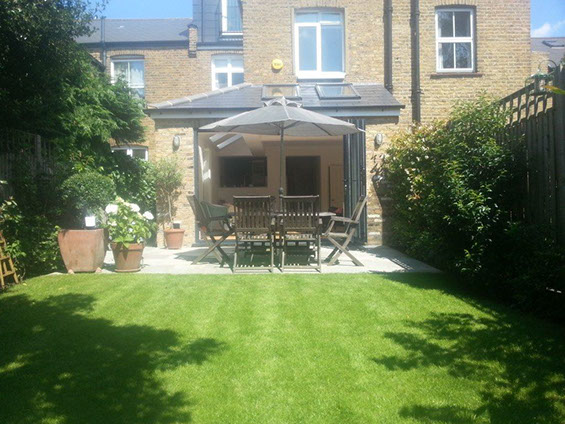
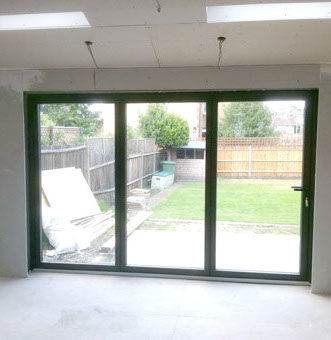
Our highly-skilled in-house team produce high-end properties where we aim to exceed client expectations.



Property extensions guide
Adding extensions can be a great way to add space without having to relocate. Everything, from planning permissions, designs and costs of an extension will be covered in this definitive guide.
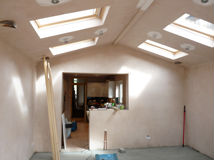
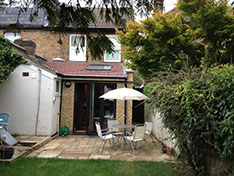
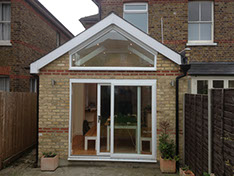
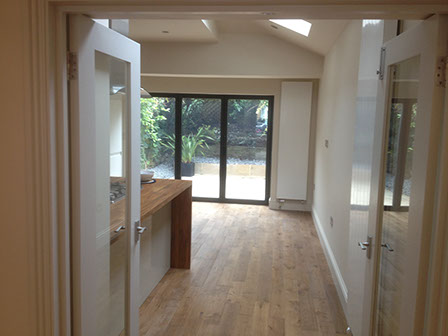
We can provide any type of extension you desire? Whether it be a side, rear or two storey extension. There is enormous potential to change the dynamics of your home.
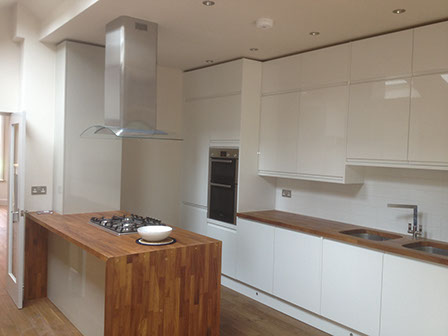
It may be that you would like a new kitchen, an ensuite for a bedroom or simply room living space.
Whatever your choice, we at More Than Lofts can help you realise your dream.

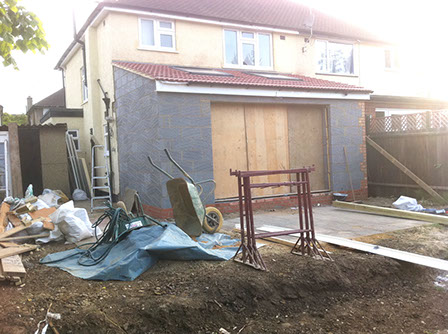
Should You Add A Home Extension?
The difference between not moving and extending your home all boils down to stamp duty. Consider the following factors - if the costs of hiring an agent to sell your house, then buying a new house is too much, then the stamp duty is such that you could have a nice extension planned out for more or less the same costs.
Some Essential Factors to Keep in Mind
You will want to keep a careful eye out for even the smallest extension projects so you can come out ahead in the investment aspect. For example, if you’re looking to have an extension in the kitchen area of your Victorian home, would it better to add in a two storey or just a single one? What would be a great addition to the above floor?
You’ll also need to think about practicality during the process of constructing the extension. Access is one of the most important elements to consider. As you add an extension, will all your cars be parked on the driveway? If there’s no driveway, and off-street parking isn’t allowed, then this could be a major reason for a planning permission refusal.
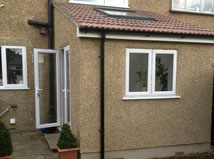
Also, is your property located in a terrace where you don’t have rear access for loading and unloading of building materials? If so, then you’ll have to run almost all things, from girders, blocks, gutter and beams through the front. Aside from that, there are other elements you will need to think about as you get to the plan-drawing stage. Some of them are the following:
- Rights of way
- Any flooding history
- The surrounding nature
- Services
- Your property’s soil conditions
- The Costs of an Extension
There’s not one general estimate for an extension. You will need to think if you’re doing a one or two-storey extension, how much glazing you’ll need, how you intend to use the extension and your home’s soil type, which affects how strong the building foundations are.
A straight extension in the UK will cost you more or less around £1,000 to 2,000 per square meter, depending on the area. The specification standards you put out will have a large factor on how much your new extension will cost. Extension professionals quote the following for a single storey extension in cost per square meter:
Basic Quality will cost around £1,000 to £1,700
Good Quality will cost around £1,700 to £1,900
Excellent Quality will cost around £1,900 to £2,200
Going for a 2-storey extension won’t necessarily double the cost per square meter, as you are only putting in additional floor joists, walls and the standard finishes and interior fixtures. Keep in mind that a roof and sturdy foundations are essential whether you’re adding a one-storey or two-storey extension.
Tip: You should weigh the overall costs of building your extension on the overall value it will add for your property.

The Planning Permits Needed For Extensions
Not all extensions require a planning consent. According to the Permitted Development Rights, there’s a large number of extension types that won’t need a planning permission to build. Here are some general guidelines to follow:
If your property is located in a National Park or a Conservation Area, then the Permitted Development states that any resulting work will be considerably limited.
- Extensions can be done only once on original buildings on July 1 1948 or on its actual building date. For Northern Ireland, the extension can be done only once on original buildings on October 1 1973 or on its actual building date.
- Extensions may be done as long as it does not cover more than half of the garden.
- Rear extensions must be only one storey. Side extensions in Designated Areas must have planning permits.
- Side extensions must have the following requirements: a width not more than 1/2 of the original property, a height of not more than 4m and it should be single storey only.
- Extensions may not be built more than the forward building line of your original property dwelling.
- The extension materials must be made from the original materials as your existing property dwelling.
- Two-storey extensions may not be 7m or nearer to the rear boundary.
- Here are the height restrictions: ridge height extensions must not be built higher than the original property, and single storey extensions may not be 4m higher in relation to the eaves and ridges.
- A detached dwelling may be extended up to 8m on the rear if it’s a single storey extension, or up to 3m if it’s a double storey extension.
The local authorities may put in a removal of your Permitted Development Rights when the body feels that new work may threaten the area’s overall character. If you have any doubts, it would be best to check with the local planning department authorities.
See your local planning office to know what is and what isn’t permitted if you’re unsure whether your extension might require a planning permit. This is a must-have if you are planning something unique and specific. Do a little bit of research in regards to local planning policies to see if it would become a tedious legal process in terms of planning your exotic property extension.
Listed Buildings
All changes to listed buildings require specific consent and may be an act of criminal offence to change without prior agreement. A listed building is regarded as more important in its existing state than any of the extensions you may plan to add to it. Any and all types of extensions should consider the historical meaning, the appearance and the materials used in the construction of the original property.
You may need listed building consent and planning permission, depending on the size and scope of the extension you’re proposing.
Building Regulations
You will need Building Regulations Approval for all types of new extensions, whether it does or doesn’t require a planning permit. These Building Regulations are passed down by Parliament, and was created to ensure construction standards and minimum design aspects are achieved. Moreover, it covers the essential elements such as access, drainage system, insulation, fire and other safety standards.
Building control officers would not supervise for you. Their main role is to make sure that building regulations and its minimum standards are met in each and every building extension.
How to Meet Building Regulations:
Submit a Notice for Building. This statement informs the proper council that you are intending to comply with all the building regulations in lieu of your extension project. The building notice also provides the building control department notice of your intent to start the project on the next 48 hours. Surveyors will visit the extension site and check up on the stages. They will also inform you of any extension issues which could arise.
Submitting a Building Notice is rather risky because it does not necessarily get the work approval, or the go ahead signal of building control. The surveyor may or may not know you’ve contravened one or many regulation requirements. It could prove to be more tedious, as you will have to double back and correct problems as you build your extension.
Sending in a Full Plan Submission. This will be delivered to your local authority. You pay a nominal fee, and a building surveyor visits your extension site in different stages. He or she will also advise you on any immediate or future extension problems as needed.
Local Authority Grants
Unless you are disabled or your house is listed as a Grade 1 or Grade 2 housing condition, then you will have a hard time obtaining the necessary permits for the work extension. There are some regulatory bodies which can help you bring it up to par (bringing it up to a basic standard for demolition avoidance), so make sure you check in with your local authorities.
Electrics and Heating Concerns
Electrical Extensions
Most homes and properties may need to have an additional circuit which draws from the main distribution board. Any other work unless noted as extensive will have to expand their existing ring circuits to accommodate the extension project.
Keep in mind that ring circuits can only reach up to 100 square meters, but there’s no limit to the number of sockets it can accommodate. Doing so provides the opportunity to add more power points. Many homeowners take this extension opportunity to replace single-socket outlets with double ones, or install outside lighting in the process.
Central Heating Extensions
Property owners should check whether their existing central heating can accommodate the building of an extra room. If the boiler doesn’t have the necessary power to heat the added room, then a second system might be more economically sound as compared to upgrading the current one.
You may be able to save money by adding in a separate electrical system instead of having to pay for a new boiler for the extension. Many homeowners opt for electric radiators or electric underfloor heating in these cases.
You may need to pay attention to the integrity of your pipework before starting the remodeling project to avoid having to re-plaster.


Back to top

MTL
Our services
Our work
Visit our shop
Follow us
More Than Lofts
32 Central Road
Worcester Park
Surrey KT4 8HZ
T 020 8330 0090


Copyright © More Than Lofts 2019. Registered Office Global House, 1 Ashley Avenue, Epsom, Surrey, KT18 5FL. Registered in England. Company Registration No. 06358741 VAT No. GB926325916


